
Creating a Supporting Character

As far as I’m concerned, a story is only as good as its supporting characters. Naturally, the main character needs to be interesting, but if the characters accompanying the MC are nothing but cardboard cutouts and clichés, or if they have no hint of a life beyond their relationship with the MC, then I’m probably going to find the story too dull to finish.
Creating intriguing side characters is one of the great joys of writing. I know that many authors plan ahead and develop characters for their stories before they begin a book. That’s laudable, but it’s not how I work. I create my characters when I need one to appear. I’ve told the story many times, but when I began writing my first book, A Troll Walks into a Bar, I started with nothing but a blank screen. Not only did I have no supporting characters, I didn’t even have a main one. I wrote a long sentence about someone describing a troll entering a bar, and decided the person describing the troll was a private detective. Everything else flowed from there.
Since I always begin writing my stories with only a vague idea of what it’s going to be about, I almost never know ahead of time who my supporting characters are going to be. I’ve written nine novels and one novella, and I’m well into my tenth novel. In all these books, I’ve created only four new supporting characters before I began writing the story: Madame Cuapa and Detective Kalama in A Witch Steps into My Office, the Huay Chivo in A Hag Rises from the Abyss (actually, I ran across him while researching Mesoamerican folklore and then shamefully reinterpreted him to fit my story needs), and Dwayne in Claws of the Collector. All my other supporting characters arrived when the story called for them.
Here’s an example of how it works. When I was writing Troll, I wanted my MC, Alexander Southerland, to be a solitary figure, a loner without friends, a man whose idea of a good time was to sit by himself with a stiff drink in an out-of-the-way booth in the back of the bar and observe people from the shadows. But very quickly in the course of the story, I realized Southerland couldn’t be entirely without friends, or, at least, without significant people in his life. I reached a point in the story where Southerland needed help from… well, someone. Not necessarily a friend, but someone he could count on to a certain point. But who can a loner count on?
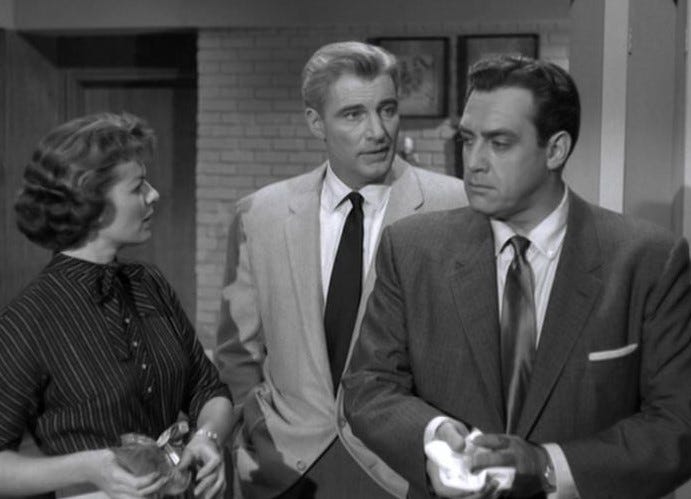
I had to think about that. Southerland was a private detective, and that meant he needed clients. Preferably, for the sake of convenience, at least one steady client. My mind flashed to Paul Drake, the private detective Perry Mason turned to whenever he needed any investigative work to be done. Perry Mason was one of my favorite shows when I was growing up, and I always liked Drake, who was not only competent, but stylish. Mason himself, of course, reeked of style. Well, the dour, working class Southerland certainly wasn’t Drake, but it was feasible that he, like Drake, might get steady work from a lawyer. It couldn’t be a socially elite attorney like Mason, though, who probably wouldn’t trust a mug like Southerland to shine his shoes. No, the attorney had to be someone who would fit in Southerland’s circle.
So I dreamed up Robinson Lubank, the sleaziest attorney in Yerba City. I wanted him to be competent, but corrupt. In fact, I wanted his competence to be rooted in his corruption. So I made him a blackmailer, and I gave him an extensive library of kompromat on every important person in town. And who finds this salacious material for him? Why, a private detective who’s not afraid to blur the line between respectable and shady. Someone like Alexander Southerland. The very fact that Southerland received the bulk of his cases from Lubank added much-needed depth to Southerland’s character.
I went to work on Lubank. I decided I didn’t want him to be human. He became a gnome, a species of sentient beings who, along with trolls and dwarfs, followed the Dragon Lords out of Hell in the early days of human history (until this point, I hadn’t introduced gnomes into the world I was building). Gnomes were smaller than humans, and clever. I gave Lubank loud clothes and an obvious hairpiece that kept slipping down to his rounded gnome ears. I made him abrasive and foul-mouthed, but both intelligent and street-smart, and I gave him the ability to be suprisingly comfortable in polite society.
What kind of relationship would a character like Lubank have with someone like Southerland? They wouldn’t be friends in the conventional sense. It would have to be transactional. Lubank needed Southerland’s expertise, and Southerland needed a client who could give him somewhat steady work. This wouldn’t be the basis for a true friendship, like the one Mason and Drake seemed to have, but I thought that perhaps something resembling friendship could develop from this professional relationship.
I knew I had a good justification for the new side character, but it wasn’t enough. I thought the relationship needed some additional juice.
It occurred to me that because Southerland was the kind of guy who couldn’t avoid trouble, he was also a guy who would often find himself needing a good lawyer. It seemed to me that Southerland needed Lubank more than Lubank needed Southerland. Therefore, clever and unscrupulous dude like Lubank would likely be able to take advantage of Southerland. So I came up with The Deal: Lubank gives cases to Southerland and agrees to Southerland’s terms. When Southerland finds himself in legal trouble, Lubank would be there to bail him out—and to rack up billable hours in the process! In fact, the money Southerland made from the cases Lubank tossed his way would always fall short of the debt Southerland owed Lubank for his services, and Southerland would find himself forced to continue working for his corrupt mouthpiece in a futile effort to break even.
Now I had the core of the relationship between my MC and my new supporting character, and I was pretty damned enthused about it. And it took me less than five minutes to build the basics of both the character and his relationship with my protagonist.
Once I had Lubank in my head, I began writing the scene. But then, as Southerland was approaching Lubank’s place of business, I received a bonus.
Lubank, I decided, would, like Perry Mason, operate a one-man firm. But, like Mason he needed a secretary. Mason had the coolly efficient Della Street, and Paul Drake would give her a “Hi, Beautiful” every time he walked into the office. Lubank needed his own version of Della (keeping things simple, I wrote her as a secretary/receptionist), but it wouldn’t be the flashy detective initiating the shameless banter this time. I wanted to stand that trope on its head. So as Southerland opened the door to Lubank’s office, he encountered the chain-smoking Gracie, coolly competent, excessively flirtatious, and always in control of the situation. Lubank the gnome and Gracie the human, I decided, would be a couple, not just married, but hopelessly and happily committed to each other in this unusual pairing, no matter how scandalously she toyed with Southerland.
Now I had not one, but two characters, and from the moment I conceived of them they had enough depth to be interesting. In fact, they became recurring characters, and I was able to develop them further with each appearance. I’m pleased to say that both of them have played vital roles in most of the stories in my seven-book Southerland series. I had no idea anything like that would happen at that early point in my first book when I realized Southerland needed help from some hitherto unknown person or persons. I love Lubank and Gracie madly, and, to my delight, reader reaction to both characters has been overwhelmingly positive. Southerland wouldn’t be half as interesting without them, and neither would my stories.
Supporting characters often hold the entire construction together (that's why they're called supporting, after all). I was telling writing partner Russell Thayer yesterday that our new retro-noir had great secondary players. They have substance and interesting arcs. And yes, they weren't there at the beginning. Some characters pop up and demand to be heard. They push on the plot wanting more lines. Of course they'll get them. They're the heart and the color. And we love them!
I love that most of the characters are grown-ups. Not nescessarily mature of course, but then, there are so few mature adults in this world too.